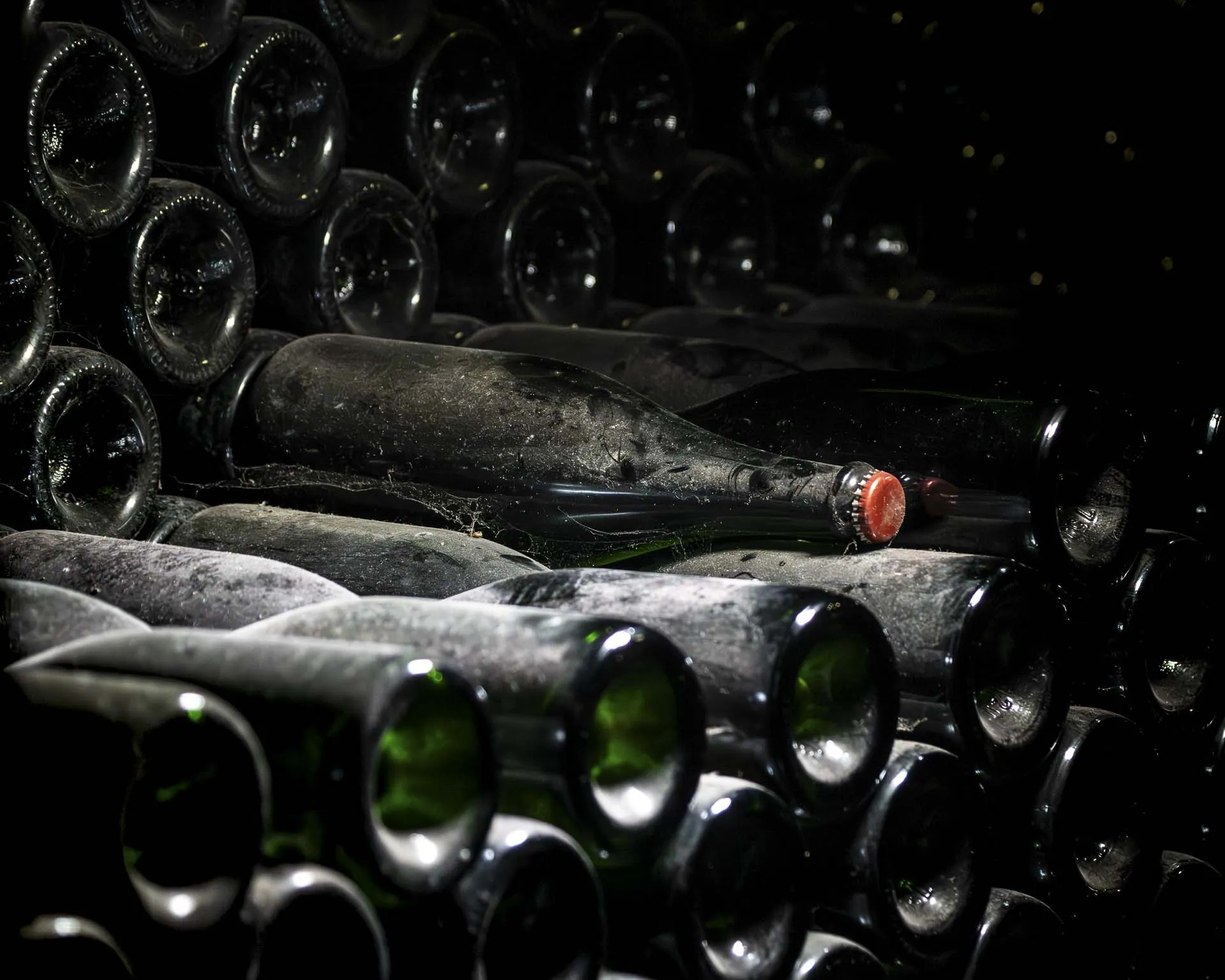
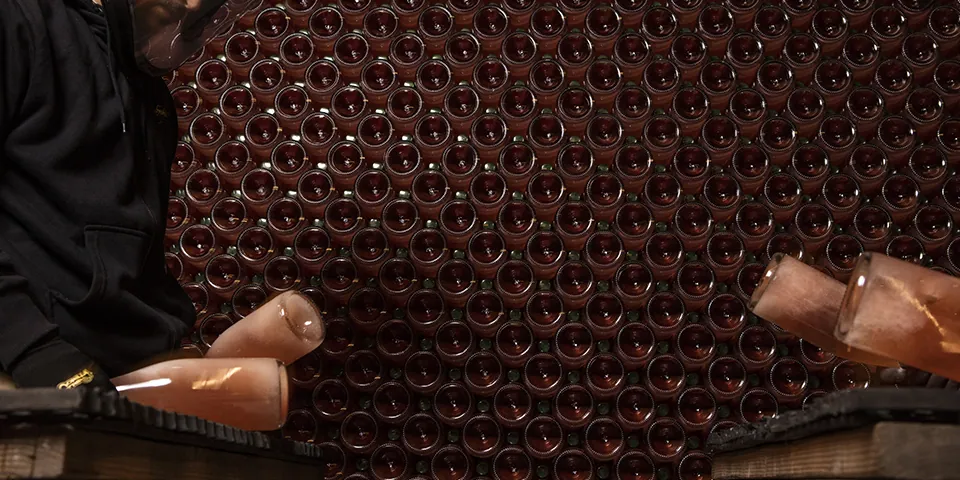
Schramsberg bottles stacked in the historic caves

Schramsberg Vineyards focuses on producing the finest and most complex handcrafted sparkling wines in California. Preserving century-old traditions, many of our viticultural and winemaking practices are still carried out by hand.

Our tête de cuvée sparkling wines receive an impressive seven to eight years of bottle aging prior to release, the balance two or more years. All of our wines are enjoyable upon release, but can also be cellared for 20 years or more. Grapes are hand harvested, the wines are handcrafted, and the bottles are stacked and riddled by hand in our underground caves.

Barrel fermentation and aging. Unique among California sparkling wine houses, Schramsberg ferments 25% of its juice in oak barrels to produce a richer, more luscious style, and keeps a library of reserve base wines barrel aged for up to 10 years. In the J. Schram and the Schramsberg Reserve, 40 percent of the components are barrel-fermented.

Méthode traditionnelle is the labor-intensive and costly process whereby wine undergoes a secondary fermentation inside the bottle, creating bubbles. All Champagne and most high-quality sparkling wines are made this way.

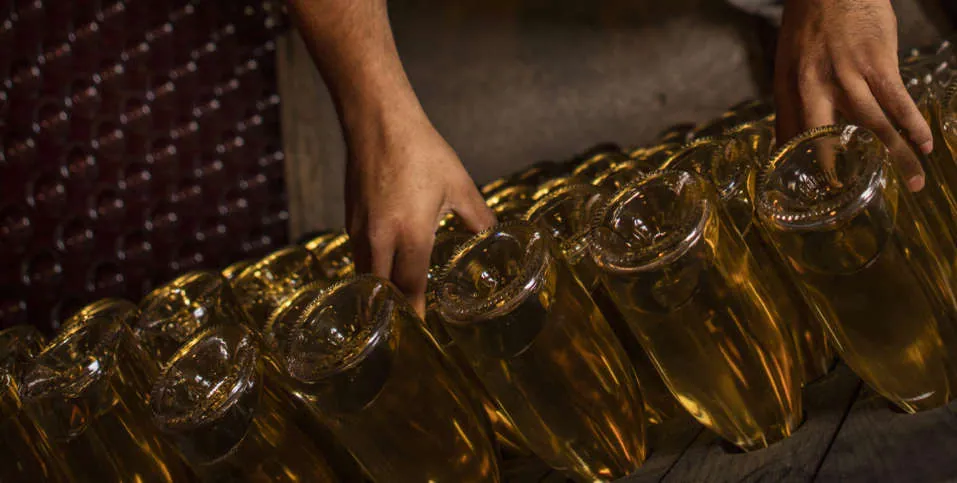
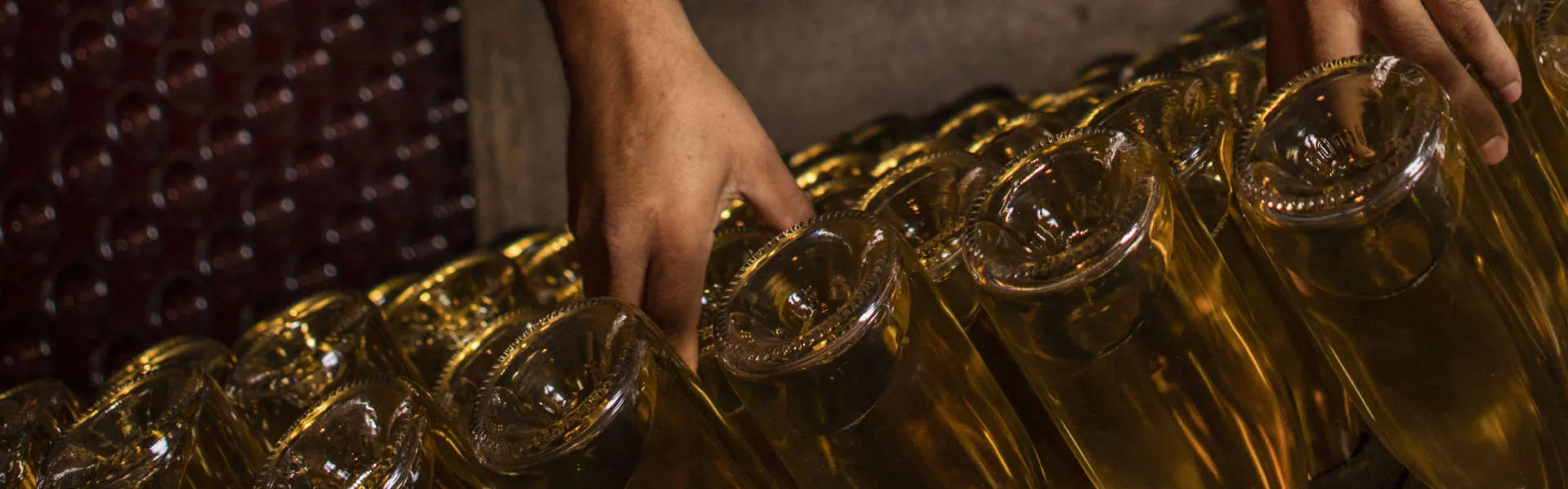
Hands riddling bottles
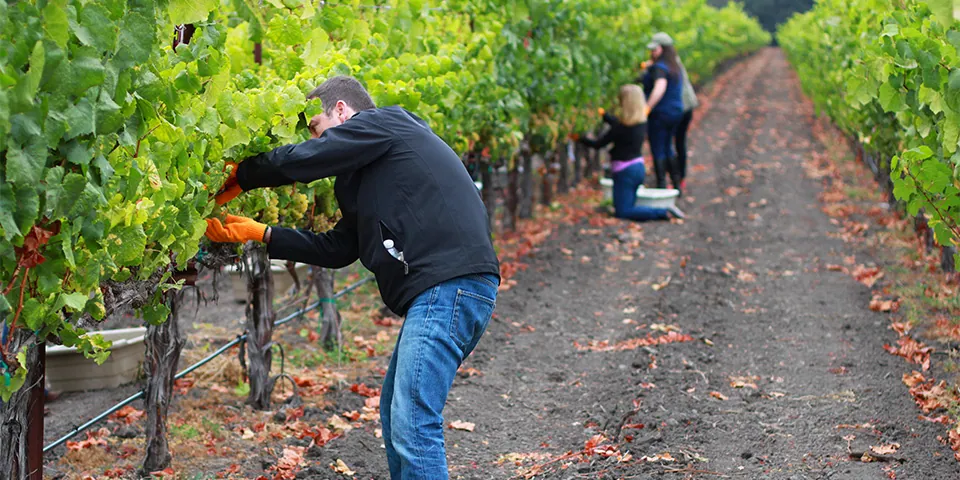
  1. 01Picked by hand

    Hand-picking, early-morning harvesting, and light pressing of the grapes from more than 78 cool-climate sites are critical for maintaining juice quality.

  2. 02Base wines & blending

    25% of the juice ferments in oak, unique among California sparkling houses; the team tastes some 250 base wines each spring to build each blend.

  3. 03Tirage

    The blend goes into bottle for its second fermentation, the bubbles; bottles are stacked by hand in the caves.

  4. 04Riddling

    Bottles are turned by hand, a little each day, until the spent yeast settles in the neck.

  5. 05Disgorging

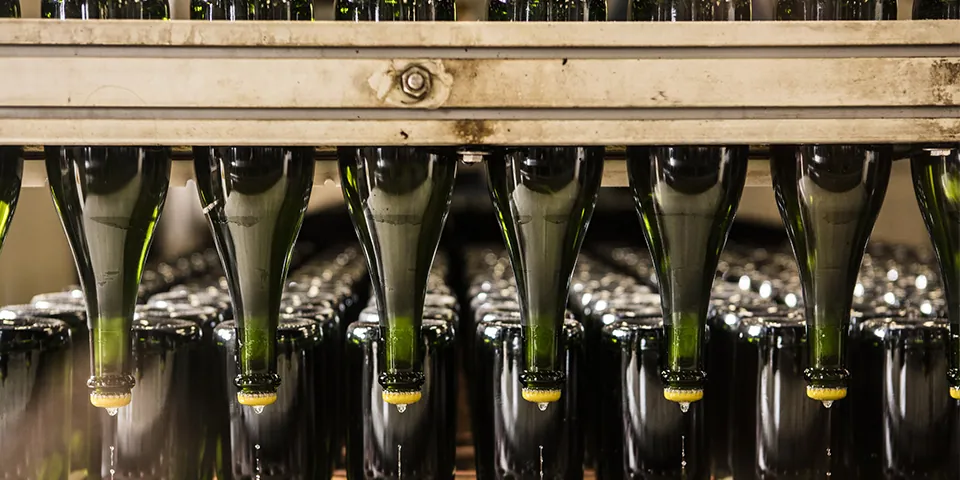
    The yeast plug is removed and a finishing dosage, chosen through extensive trials, fine-tunes the balance.

  6. 06Labelled by hand

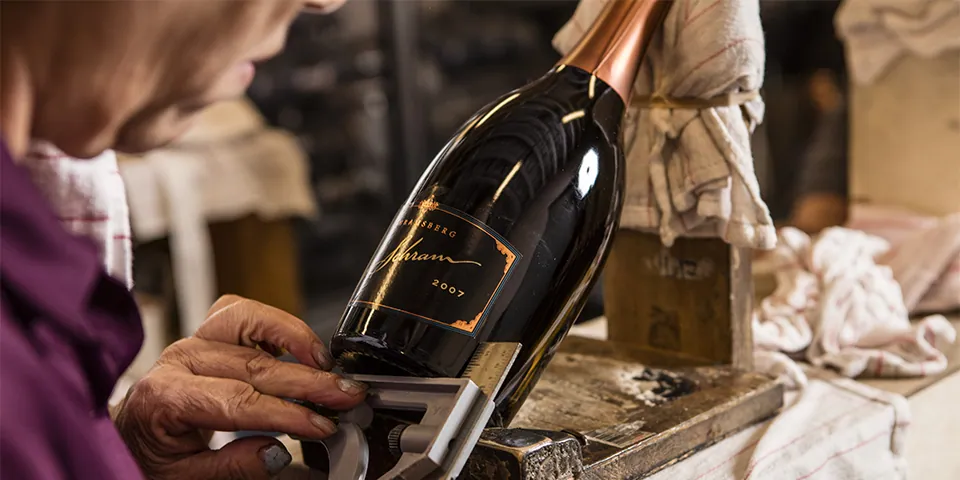
    J. Schram is still finished and labelled by hand before it leaves the mountain.

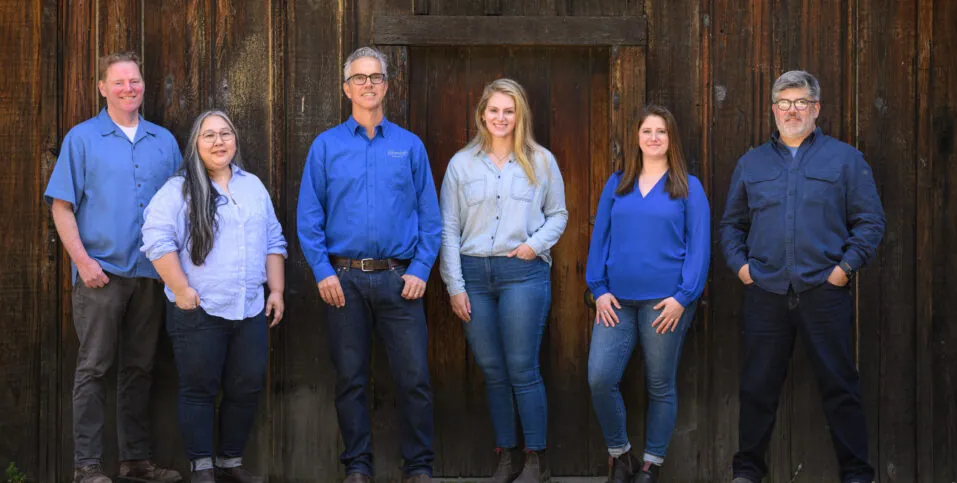
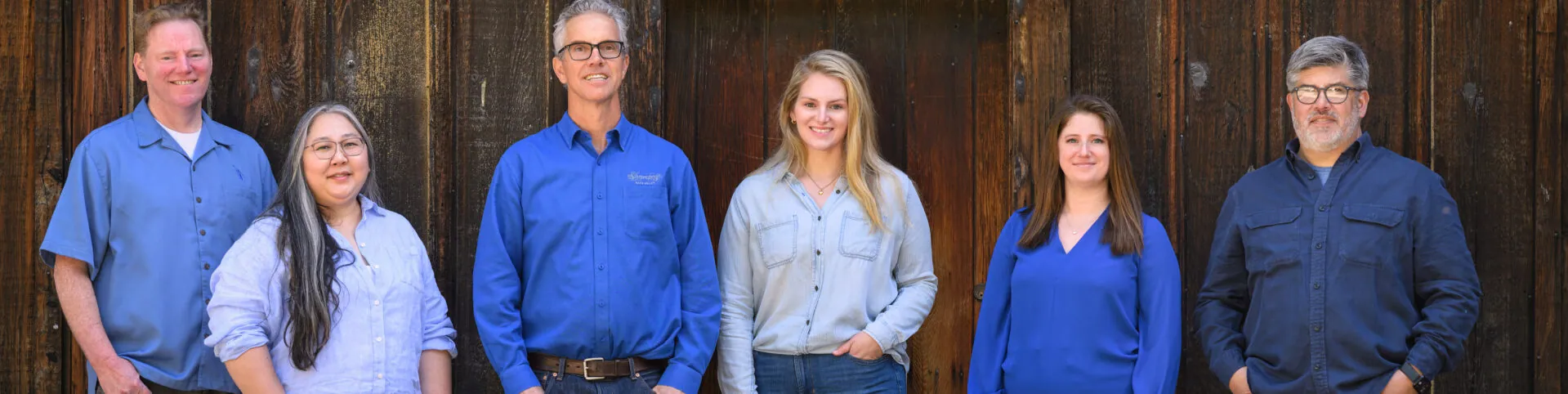
The 2025 winemaking team

J.P. Pierce, Katelyn Hill, Sam Rubanowitz, Hugh Davies, Jessica Koga and Sean Thompson.

The 2025 Schramsberg and Davies winemaking team
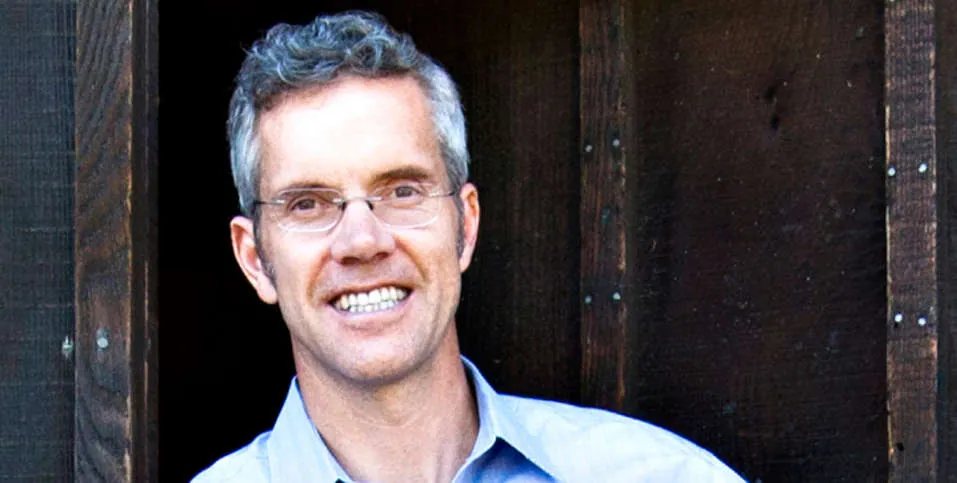
Hugh DaviesVintner, Schramsberg Vineyards and Davies Vineyards

Hugh Davies

One might say that Hugh Davies was born with a wineglass in his hand, and that wouldn't be too far from the truth. Hugh was born in 1965, the same year that his parents, Jack and Jamie Davies, purchased the abandoned Schramsberg Estate in Calistoga. Hugh grew up among the vines, caves, tanks and barrels that make Schramsberg Vineyards what it is today: the premier producer of American sparkling wines.
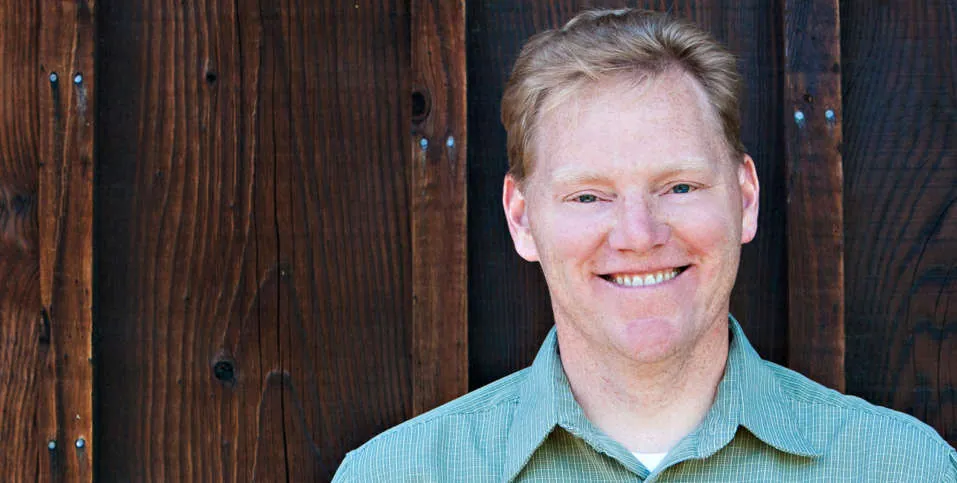
Sean ThompsonVice President of Winemaking

Sean Thompson

Growing up in the diverse agricultural region of Sonoma County, Sean Thompson acquired a deep interest in the cultivation and preparation of the bounty that comes from the soil. This interest led him to the University of California, Davis, earning a Bachelor of Science degree in Chemistry in 1992, with "minors" in tractor maintenance and bus/truck driving.

How sparkling wines age

Not only do our wines taste superb upon release, they are made to last 30+ years within the cellar. The acid level of sparkling wine is very high, a very stable environment for aging; and the wine is surrounded by CO2, greatly reducing oxidation.

As the wines do age, you will find that the brighter fruity flavors will slowly convert into more rich, caramelized ones. The red berry and strawberry flavors within our Blanc de Noirs shift to stone fruits, such as peaches and nectarines. In the Blanc de Blancs, the crisp green apple flavors slowly transform into a baked apple pie.

Fresh seafood, ceviche and oysters on the half-shell pair perfectly with a young Blanc de Blancs. Richer foods such as caviar, mushroom tarts, veal or rabbit lend themselves to the older vintages.

Do

  • Serve sparkling wines during the holidays: it pleases everyone!
  • Chill a bottle in water and ice for 20 minutes, the best and quickest way.
  • To open, hold the bottle at a 45 degree angle and turn the bottle, not the cork.
  • Use tall, narrow, clear flutes instead of saucer-shaped glasses.
  • Hold your flute by the stem: more graceful, and it won't warm the wine.
  • Serve sparkling wine with all courses; its bright acidity makes it versatile.
  • Age your sparkling wine: good ones age 20+ years, gaining creaminess and complexity.
  • Use large formats, magnums, 3L and 9L. They're so festive!
  • Cellar vintages from your wedding year or the children's birth years.

Don't

  • Think of sparkling wine as a special occasion beverage; it can be enjoyed as often as wine.
  • Store your wine in direct light or in hot or scented locations.
  • Chill it in the freezer (use ice water instead).
  • Point a bottle at people when opening it.
  • Use dusty or wet glasses, or pre-chill your glasses.
  • Keep it in the refrigerator for extended periods.
  • Use a spoon to keep the bubbles in an open bottle: it does not work.
  • Serve a Brut with a sweet dessert. The wine should be sweeter than the dessert.
  • Decant a sparkling wine.